
Voyager 1 is now one light-day from Earth: the Empire State Building turned gold
In short: NASA's probe, launched in 1977, reached 26 billion km on November 18: a signal now takes 24 hours to reach it. It is the first human-made object to do so.

What we announced at the start of the month has now happened: NASA's Voyager 1 probe reached one light-day from Earth on November 18, 2026, at 5:16 a.m. EST. According to Space.com, it is the first human-made object ever to reach that distance.
What does one light-day mean?
It is the distance light travels in 24 hours: about 26 billion kilometers (16 billion miles). Since radio waves travel at the speed of light, a command sent from Earth takes a full day to reach Voyager 1, and the reply takes another day to come back. “The Earth and Voyager are exactly 24 hours apart at the speed of light,” Voyager Project Scientist Linda Spilker told Space.com.
Why did the Empire State Building turn gold?
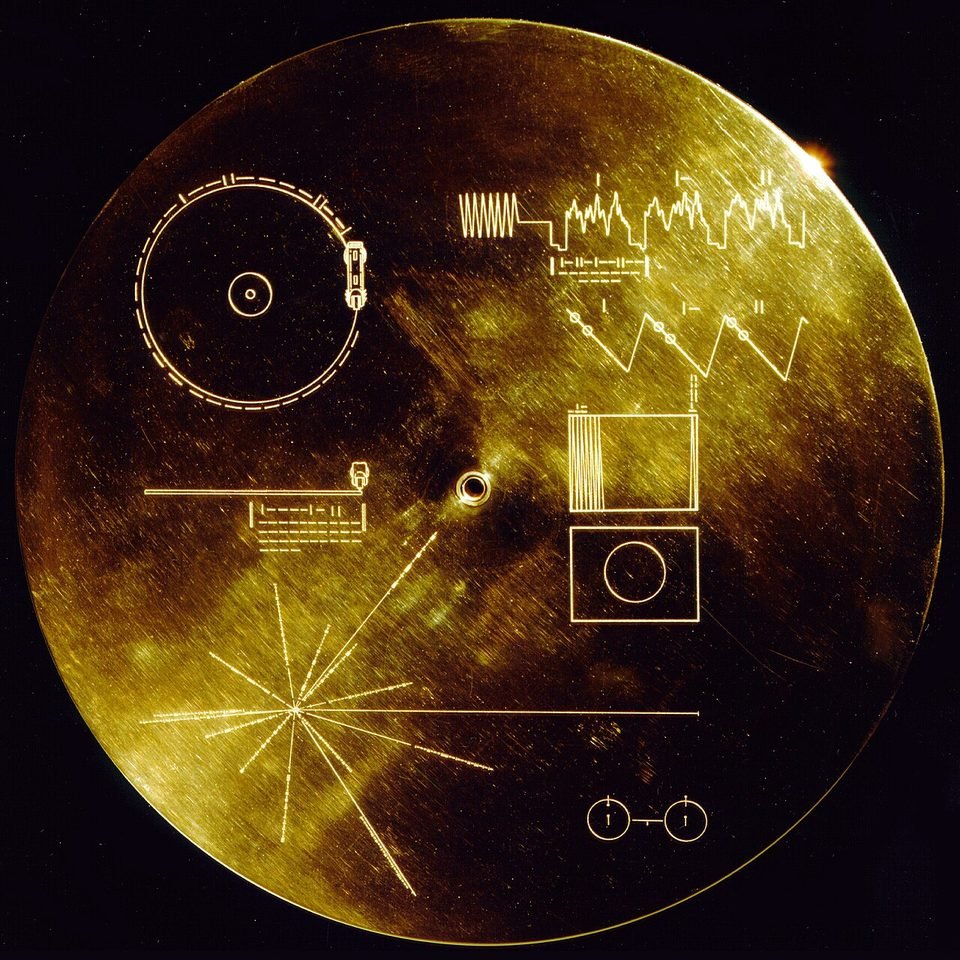
On the night of November 17, the Empire State Building in New York was lit up in gold to celebrate the milestone. The color stands for the Golden Record, the gold-plated copper disc flying on Voyager with sounds and images chosen to portray the diversity of life and culture on Earth.
What has Voyager 1 discovered in almost 50 years?
Launched on September 5, 1977, it discovered active volcanoes on Jupiter's moon Io, a ring around Jupiter and the thick atmosphere of Saturn's moon Titan. On August 25, 2012, it became the first spacecraft to leave the heliosphere, the Sun's bubble of particles. Today it travels at about 61,000 km/h through interstellar space and is still sending data.
Watch the NASA video above and share this story with anyone who loves space. Keep reading: Voyager 1 is about to reach one light-day from Earth: no human-made object has ever been this far · The Euclid telescope discovered its first comet without looking for one: C/2026 S1 · More science news.
🤖 Watch this story on video with BOT-MBTECNIC
Enjoyed it? Follow BOT-MBTECNIC: one gaming and tech story on video every day.
Try these too
Keep reading
The Euclid telescope discovered its first comet without looking for one: C/2026 S1
Euclid, built to study dark matter, found a comet by chance 1.3 billion km from the Sun, on an orbit almost perpendicular to the planets'.
Mars and Jupiter almost touching on November 15-16: they won't look this close again until 2029
The two planets will sit just 1.2 degrees apart, about a finger's width, next to the star Regulus. When and where to look to see them without a telescope.
A star faking supernovae for 15 years: Chandra finds what makes it erupt
An invisible companion, a black hole or a neutron star, strips material from an unstable star every 113 days, causing flares as bright as a supernova.