
A star faking supernovae for 15 years: Chandra finds what makes it erupt
In short: An invisible companion, a black hole or a neutron star, strips material from an unstable star every 113 days, causing flares as bright as a supernova.
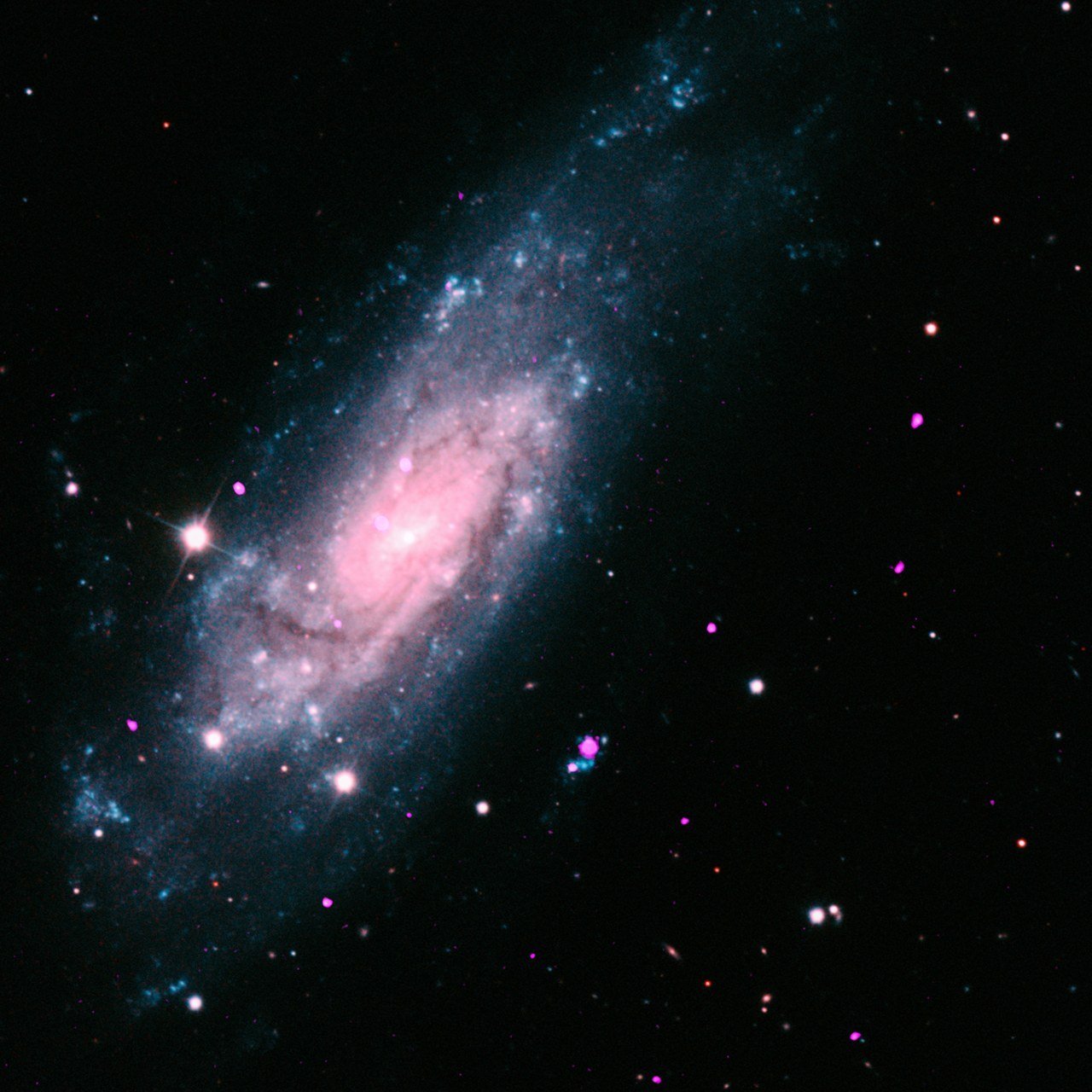
For 15 years, astronomers watched a star in the galaxy NGC 4559 flare up like a supernova and fade, again and again. Now NASA's Chandra X-ray Observatory has found the cause: the star has a hidden companion stealing its material. NASA published the result on November 9, 2026.
What was discovered
The star is called AT 2016blu and sits about 25-30 million light-years away in the constellation Coma Berenices. It was spotted on January 11, 2012 and looked like a supernova, but when the light faded the star was still there, and it erupted again every 113 days. 27 outbursts have been detected so far. It is a "luminous blue variable", one of the most massive and luminous stars in the universe, at least 33 times the Sun's mass, and very unstable. Astronomers call stars that do this without actually exploding "supernova impostors".
How they found out
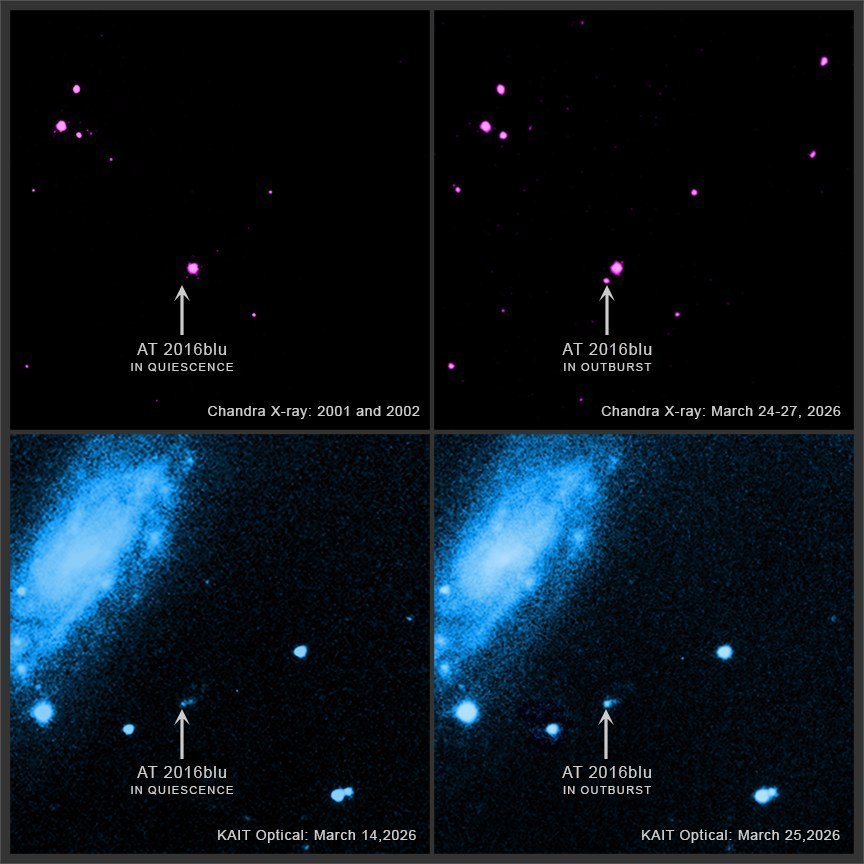
The team, led by Mojgan Aghakhanloo of the University of Virginia, got Chandra observing time just as the star entered a new outburst in March 2026. It detected a powerful burst of X-rays coinciding with the brightening. When Chandra looked at that galaxy in 2001 and 2002 it saw nothing unusual. The X-rays indicate the star orbits with an unseen compact object, a neutron star or a stellar-mass black hole, on an elliptical 113-day orbit.
Why does it look like a supernova?
Each time the compact object passes its closest point to the star, its gravity pulls material away. That material forms a disk that spins so fast and gets so hot that it emits X-rays. Those X-rays heat the cloud of gas the star ejected years earlier, and the cloud glows in visible light, mimicking a supernova. According to the authors, the amount of stolen material is far more than a neutron star can safely take in. It is still unknown whether the companion is a neutron star or a black hole.
Why does this discovery matter?
AT 2016blu is bright enough in X-rays to count as an ultra-luminous X-ray source (ULX), a rare type of object whose engine is still a mystery. That makes this system a possible "Rosetta stone" linking supernova impostors with ULXs.
Watch the Chandra video above and share this story with anyone who loves space. Keep reading: Voyager 1 is about to reach one light-day from Earth: no human-made object has ever been this far · NASA's Swift telescope is about to fall to Earth: where it could land and which parts might survive · More science news.
Try these too
Keep reading
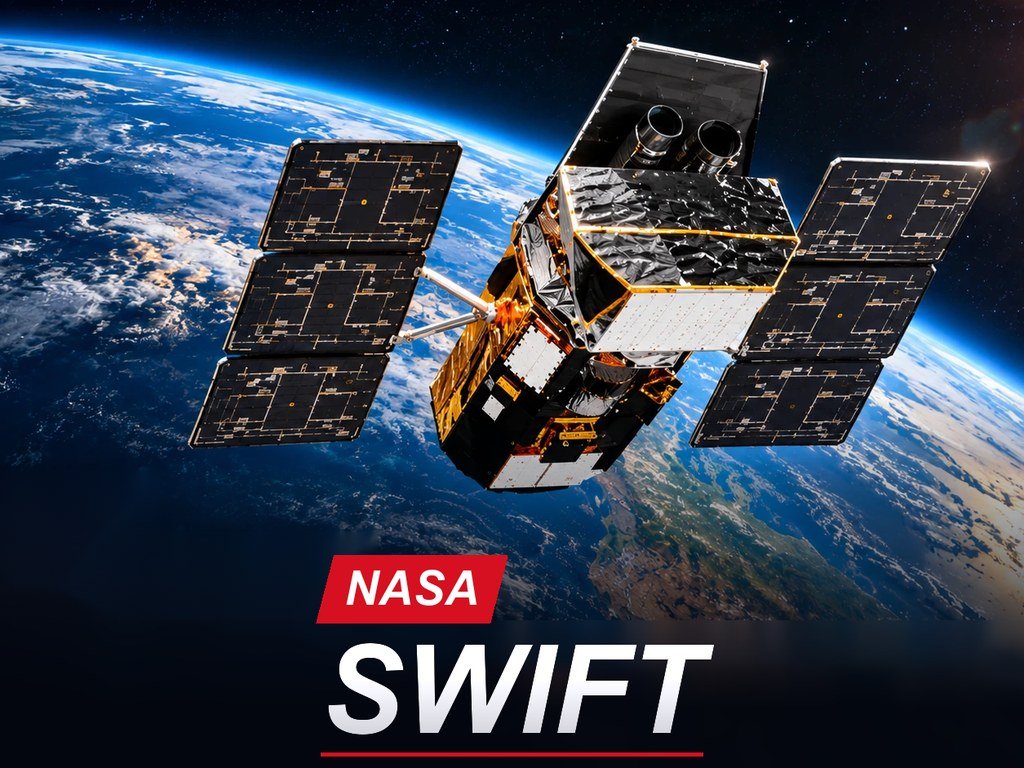
NASA's Swift telescope is about to fall to Earth: where it could land and which parts might survive
After 22 years and a failed rescue, the observatory will reenter the atmosphere uncontrolled in the coming days.
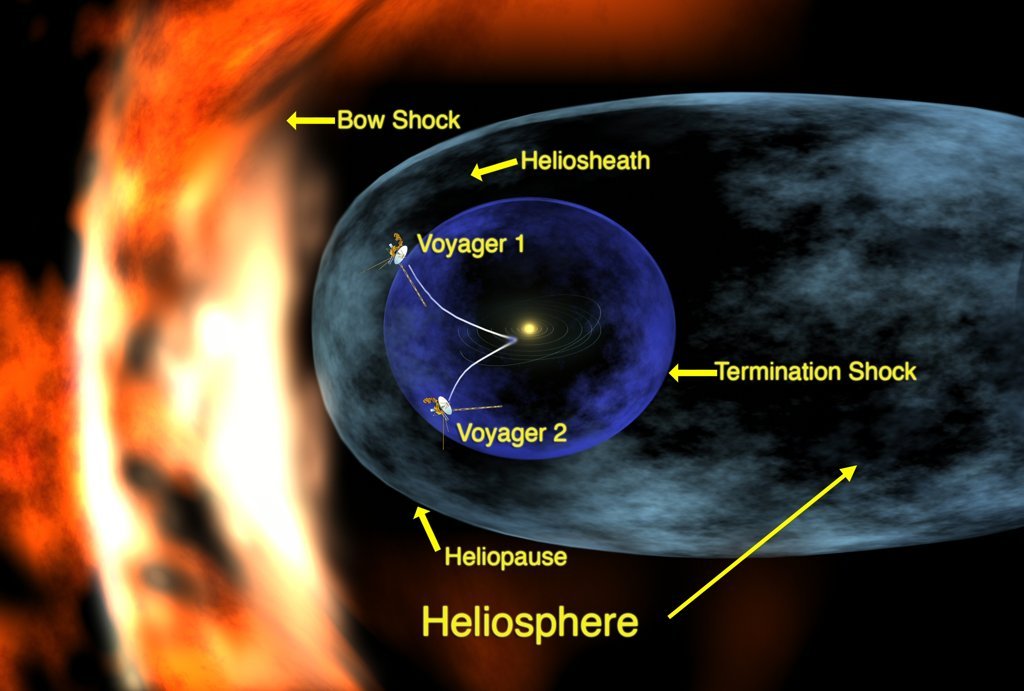
Voyager 1 is about to reach one light-day from Earth: no human-made object has ever been this far
NASA's probe, launched in 1977, will pass 26 billion kilometers (16 billion miles) on November 18, 2026.

Swift goes dark: NASA ends the mission of its gamma-ray burst hunter
After almost 22 years in orbit, the Swift observatory made its last observation on October 20. With no engine to climb, atmospheric drag left it unable to point.