Swift goes dark: NASA ends the mission of its gamma-ray burst hunter
After almost 22 years in orbit, the Swift observatory made its last observation on October 20. With no engine to climb, atmospheric drag left it unable to point.
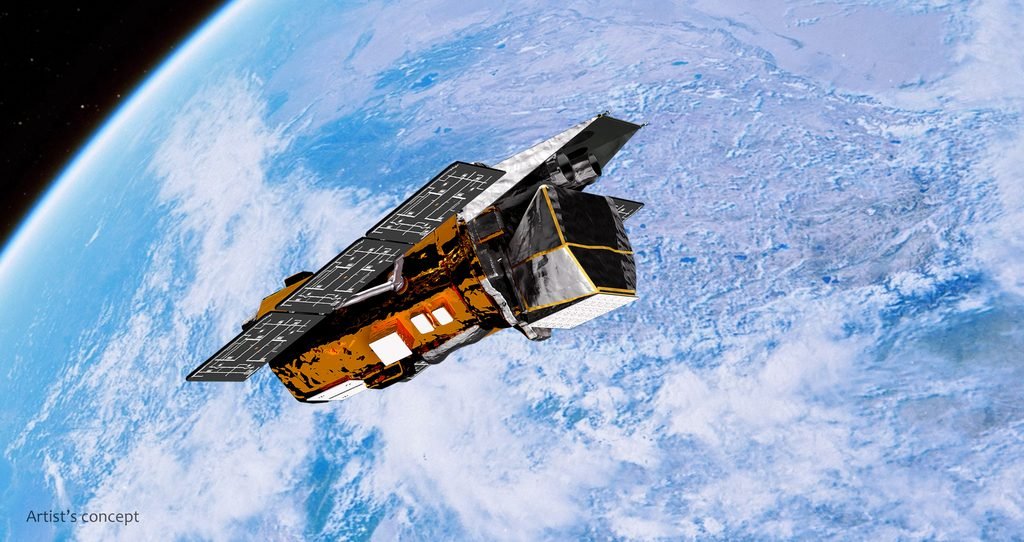
On October 23, 2026, NASA ended the science mission of the Neil Gehrels Swift Observatory. Its final observation was on October 20: the satellite was already flying less than 275 kilometers up, and atmospheric drag kept its telescopes from holding steady on a target. It is expected to re-enter the atmosphere in the coming weeks.
Swift launched on November 20, 2004, for a planned two-year mission. It worked more than ten times that long.
A satellite built to react within a minute
Its specialty was gamma-ray bursts, the most powerful explosions in the universe, which last seconds and fade before a large telescope can even turn. Swift spotted the flash and, in about a minute, pointed its other instruments at the spot. That way it observed more than 2,000 bursts and studied more than 1,400 supernovae.
The burst that changed a theory
In May 2005 it caught GRB 050509B, a burst lasting just 0.03 seconds, and for the first time the afterglow of a short burst was seen. That finding supported the idea that short bursts come from two colliding neutron stars. In total, its data appear in about 7,000 scientific papers.
Why it could not be saved
Swift had no engine to raise its orbit, and higher solar activity heated and puffed up the atmosphere, speeding up its fall. NASA hired Katalyst Space to grab it with a robotic tug and push it higher, but in August the LINK tug ran into attitude-control problems and could not reach it.
What remains is a huge public archive: almost 22 years of measurements, more than 1.5 million ultraviolet and optical images and about 12 terabytes of data that will keep being used for decades.
At MBTECNIC we like this story for the same reason we see every day at the shop: well-designed, well-maintained equipment delivers far more than it promised out of the box.