IBM links two quantum processors with four superconducting cables
In short: IBM Research connected two 120-qubit chips and the links survived three warm-up and cool-down cycles.
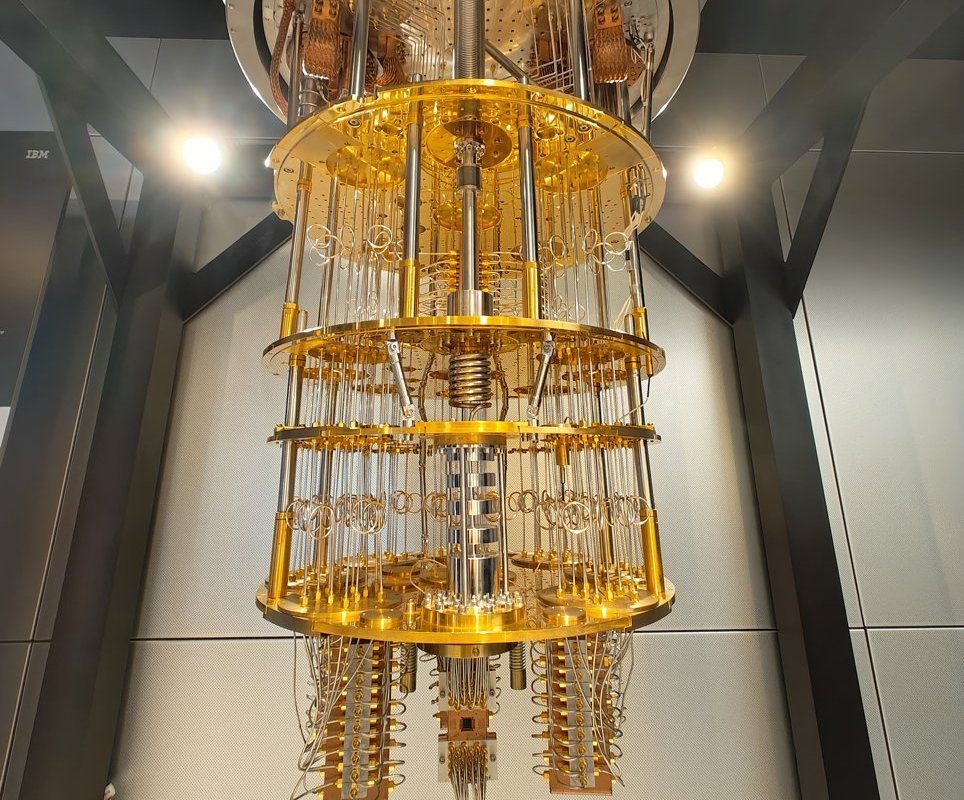
IBM Research has joined two large superconducting quantum processors with four high-quality links, installed after both chips were already mounted. It is a first, and the work was published as a preprint on arXiv, meaning other scientists have not reviewed it yet.
What they achieved
Many researchers believe the way to bigger quantum computers is to build them in connected parts, like modules working together. The catch is that the links must carry very fragile quantum information without destroying it, inside equipment cooled to just above absolute zero.
IBM linked two 120-qubit Nighthawk R1 processors. Each link uses a superconducting aluminum cable about 80 centimeters long that plugs into the chip from above rather than from the side, so several can sit very close together.
The numbers
Across the four links, quantum states were transferred with an average accuracy of 99% (99.29% on the best one). Two-qubit logic operations spanning both chips reached an average accuracy of 94.75%. With them the team created entangled states of 4 and 6 qubits shared across both processors, and all four links kept working through three warm-up and cool-down cycles.
Why it matters
If quantum computers can be built from plug-in modules, they will be much easier to expand and maintain. There is still work to do, especially on how long quantum information lasts, before this is practical for the market.
At MBTECNIC we work with everyday electronics, and we like seeing how the same idea of parts that connect and can be replaced reaches the most advanced machines in the world.