
Perseverance breaks the record: no vehicle has driven farther on another world
NASA’s rover passed 45.22 km on Mars, beating Opportunity’s mark. More than 90% of the way it drove itself.
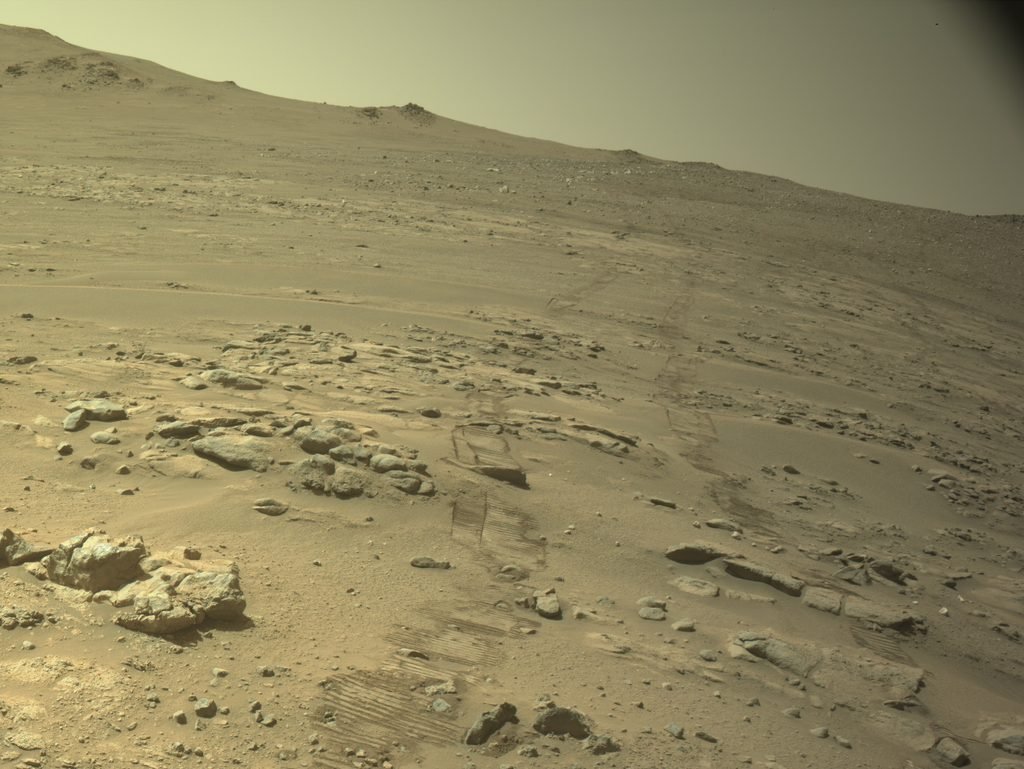
On October 11, 2026, its 2,006th Martian day, NASA’s Perseverance rover reached 45.22 kilometers (28.10 miles) driven on Mars. That beat the 45.16 km set by Opportunity, which explored the planet from 2004 to 2018, making Perseverance the vehicle that has traveled farthest beyond Earth.
The pace is what stands out: Perseverance covered that distance in about five and a half years, while Opportunity needed almost fifteen. Along the way it also passed the Moon records: the Apollo 17 rover (35.7 km) and the Soviet Lunokhod 2 (39 km).
It drives itself
The key is AutoNav, its autonomous navigation system. As it rolls, the rover photographs the terrain, builds a 3D map of rocks and holes and picks its own path between waypoints set by engineers on Earth. NASA sums it up as “thinking while driving.” More than 90% of the distance was driven this way; Spirit and Opportunity drove themselves only about 5% of the time.
The leap in computing is huge: little Sojourner in 1997 judged the ground with 20 measurement points, while Perseverance processes about 600,000. That lets it cover up to 412 meters in a single Martian day. The next software challenge is sun glare in the navigation cameras, which currently makes it park by mid-afternoon when heading toward the Sun.
What comes next
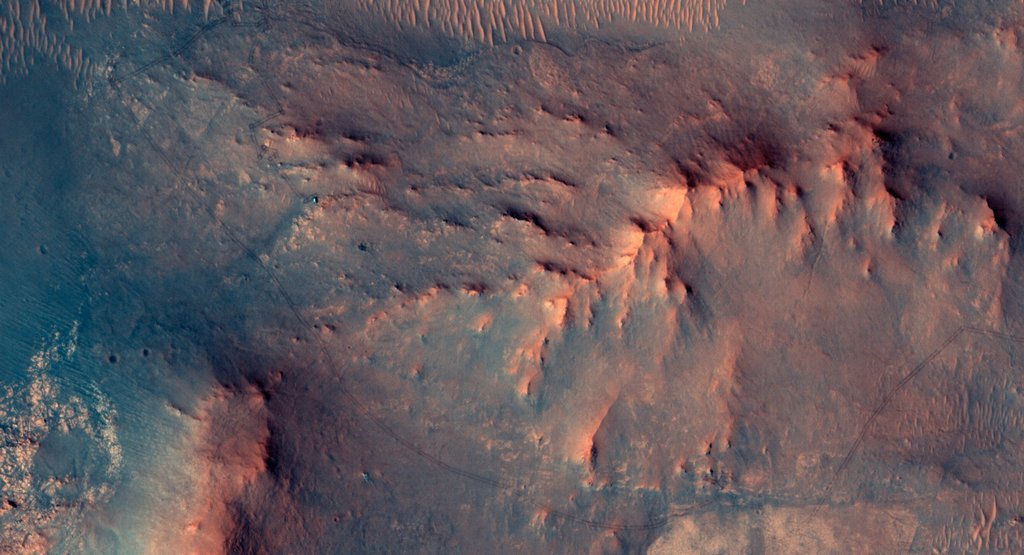
The original mission planned for no more than about 20 kilometers of driving, and it is far past that. NASA approved its first extension, which began in October and runs to the end of 2028. The rover is now heading to “Lac de Charmes” on the western rim of Jezero Crater, home to rocks about 4 billion years old — so old that erosion and plate tectonics have erased their equivalents on Earth — where the team is looking for traces of ancient hydrothermal systems. Then it will head south toward “Rainbow Falls,” a 100-meter block of ancient crust lifted by the impact that formed the crater.
So far Perseverance has collected 29 rock and soil samples, and in the rock nicknamed “Cheyava Falls” it found a potential sign of ancient life that is still being studied.
At MBTECNIC we see it as proof of what well-maintained electronics and software can do: a machine designed for 20 km that is already past 45 and still going.